
Universal Pipette Tips
Disposable pipette tips designed to fit single and multichannel pipettes from most manufacturers; offer acceptable performance compared to pipette specific tips and can be used with a variety of pipette models.
Single-use universal pipette tips are designed for compatibility with most mechanical and electronic single and multichannel pipettors.
Universal pipette tips are available in a range of types, sizes, colors, styles, and packaging configurations and may be designed for specific purposes or tasks.
- Capacity or volume based on the pipettor size
- Filters to reduce contamination and cross-contamination
- Color
- Sterility or autoclavability
- Tip style: beveled, tapered, wide bore, round, flat, or gel-loading
- Length: short or extended
- Purity: metal-free or DNase-, RNase-, ATP-, Bioburden-, PCR inhibitor-, endotoxin-, or pyrogen-free for genomic and biologic applications
- Surface treatments to reduce retention
- Packaging options to help facilitate re-stocking or eliminate waste

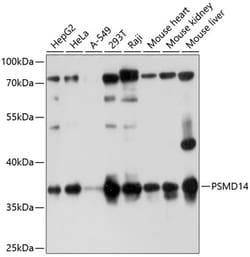
ABclonal Technology PSMD14 Rabbit pAb

This gene encodes a component of the 26S proteasome. The 26S proteasome is a large multiprotein complex that catalyzes the degradation of ubiquitinated intracellular proteins. The encoded protein is a component of the 19S regulatory cap complex of the 26S proteasome and mediates substrate deubiquitination. A pseudogene of this gene is also located on the long arm of chromosome 2.


Vacumetric NOSE CLIP (SNUFFER) 100/BOX
Latex free. Optional reusable, refillable dispenser box available free with purchase of 5 boxes or 1 bulkbox, just ask for ZMPBOX.


ABclonal Technology MYOCD Rabbit pAb
This gene encodes a nuclear protein, which is expressed in heart, aorta, and in smooth muscle cell-containing tissues. It functions as a transcriptional co-activator of serum response factor (SRF) and modulates expression of cardiac and smooth muscle-specific SRF-target genes, and thus may play a crucial role in cardiogenesis and differentiation of the smooth muscle cell lineage. Alternatively spliced transcript variants encoding different isoforms have been found for this gene.

ABclonal Technology SLC29A3 Rabbit pAb
This gene encodes a nucleoside transporter. The encoded protein plays a role in cellular uptake of nucleosides, nucleobases, and their related analogs. Mutations in this gene have been associated with H syndrome, which is characterized by cutaneous hyperpigmentation and hypertrichosis, hepatosplenomegaly, heart anomalies, and hypogonadism. A related disorder, PHID (pigmented hypertrichosis with insulin-dependent diabetes mellitus), has also been associated with mutations at this locus. Alternatively spliced transcript variants have been described.

ABclonal Technology LSAMP Rabbit pAb
This gene encodes a member of the immunoglobulin LAMP, OBCAM and neurotrimin (IgLON) family of proteins. The encoded preproprotein is proteolytically processed to generate a neuronal surface glycoprotein. This protein may act as a selective homophilic adhesion molecule during axon guidance and neuronal growth in the developing limbic system. The encoded protein may also function as a tumor suppressor and may play a role in neuropsychiatric disorders. Alternative splicing results in multiple transcript variants, at least one of which encodes a preproprotein that is proteolytically processed.
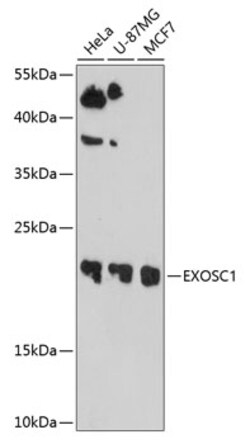
ABclonal Technology EXOSC1 Rabbit pAb
This gene encodes a core component of the exosome. The mammalian exosome is required for rapid degradation of AU rich element-containing RNAs but not for poly(A) shortening. The association of this protein with the exosome is mediated by protein-protein interactions with ribosomal RNA-processing protein 42 and ribosomal RNA-processing protein 46. Alternative splicing of this gene results in multiple transcript variants.

ABclonal Technology TAS1R3 Rabbit pAb
The protein encoded by this gene is a G-protein coupled receptor involved in taste responses. The encoded protein can form a heterodimeric receptor with TAS1R1 to elicit the umami taste response, or it can bind with TAS1R2 to form a receptor for the sweet taste response.
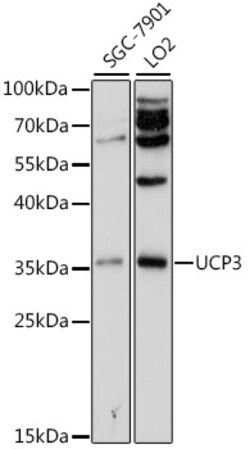
ABclonal Technology UCP3 Rabbit pAb
Mitochondrial uncoupling proteins (UCPs) are part of the mitochondrial anion carrier protein (MACP) family. They uncouple oxidative phosphorylation from ATP synthesis, dissipating energy as heat, known as the mitochondrial proton leak. UCPs transfer anions across the mitochondrial membrane and reduce the mitochondrial membrane potential. The expression of UCPs varies by tissue; this gene is primarily expressed in skeletal muscle. Its protein product is believed to protect mitochondria from lipid-induced oxidative stress. When fatty acid supply exceeds oxidation capacity, UCP facilitates the export of excess fatty acids from mitochondria. UCPs contain three solcar protein domains typical of MACPs. Two splice variants of this gene have been identified.
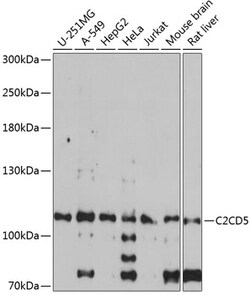
ABclonal Technology C2CD5 Rabbit pAb
Enables calcium ion binding activity and calcium-dependent phospholipid binding activity. Involved in cellular response to insulin stimulus, intracellular protein transmembrane transport, and positive regulation of transport. Located in several cellular components, including centriolar satellite, cytoplasmic vesicle membrane, and ruffle membrane.

ABclonal Technology NDUFB11 Rabbit pAb
The protein encoded by this gene is a subunit of the multisubunit NADHubiquinone oxidoreductase (complex I). Mammalian complex I is located at the mitochondrial inner membrane. This protein has NADH dehydrogenase activity and oxidoreductase activity. It transfers electrons from NADH to ubiquinone. Mutations in the human gene are associated with linear skin defects with multiple congenital anomalies 3 and mitochondrial complex I deficiency.

ABclonal Technology PSMG1 Rabbit pAb
Enables molecular adaptor activity. Involved in chaperone-mediated protein complex assembly. Located in several cellular components, including Golgi apparatus, endoplasmic reticulum, and nucleoplasm. Part of chaperone complex.

Alkali Scientific OneFit Universal Filter Tips R
OneFitmultichannel filter tips are the ultimate solution for high-throughput screening (HTS) applications These tips feature an innovative soft and stretchable TPE resin collar that creates a flawless seal guaranteeing unparalleled performance and accuracy with each use The reduced insertion forces make sealing and ejection effortless on multichannel pipettes streamlining your workflow Designed to fit any pipettor OneFitensures ergonomic comfort during use enhancing efficiency in the lab Additionally the soft seal and low insertion force significantly reduce pipette cone wear and erosion extending the lifespan of your multi-channel pipette While the collar is soft and flexible the rest of the tip is made from rigid resin ensuring crystal-clear straight tips for precise dispensing For added convenience and confidence OneFitmultichannel filter tips are graduated for volume confirmation and come in extended volume sizes ideal for reducing contamination risks in sensitive assays Cer

ABclonal Technology WDR11 Rabbit pAb
This gene encodes a member of the WD repeat protein family. WD repeats are minimally conserved regions of approximately 40 amino acids typically bracketed by gly-his and trp-asp (GH-WD), which may facilitate formation of heterotrimeric or multiprotein complexes. Members of this family are involved in a variety of cellular processes, including cell cycle progression, signal transduction, apoptosis, and gene regulation. This gene is located in the chromosome 10q25-26 region, which is frequently deleted in gliomas and tumors of other tissues, and is disrupted by the t(10,19) translocation rearrangement in glioblastoma cells. The gene location suggests that it is a candidate gene for the tumor suppressor locus.
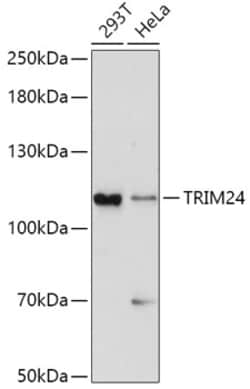
ABclonal Technology TRIM24 Rabbit pAb
The protein encoded by this gene mediates transcriptional control by interaction with the activation function 2 (AF2) region of several nuclear receptors, including the estrogen, retinoic acid, and vitamin D3 receptors. The protein localizes to nuclear bodies and is thought to associate with chromatin and heterochromatin-associated factors. The protein is a member of the tripartite motif (TRIM) family. The TRIM motif includes three zinc-binding domains - a RING, a B-box type 1 and a B-box type 2 - and a coiled-coil region. Two alternatively spliced transcript variants encoding different isoforms have been described for this gene.
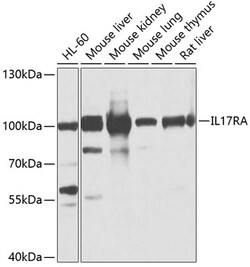
ABclonal Technology IL17RA Rabbit pAb
Interleukin 17A (IL17A) is a proinflammatory cytokine secreted by activated T-lymphocytes. It is a potent inducer of the maturation of CD34-positive hematopoietic precursors into neutrophils. The transmembrane protein encoded by this gene (interleukin 17A receptor, IL17RA) is a ubiquitous type I membrane glycoprotein that binds with low affinity to interleukin 17A. Interleukin 17A and its receptor play a pathogenic role in many inflammatory and autoimmune diseases such as rheumatoid arthritis. Like other cytokine receptors, this receptor likely has a multimeric structure. Alternative splicing results in multiple transcript variants encoding different isoforms.